Colin Siyuan Chinnery: creating a new museum model in China through sound
Colin Siyuan Chinnery (BA Chinese, 1997) is the co-founder of Sound Art Museum in Beijing. His journey from SOAS student to museum director has followed an unconventional and exploratory path, shaped by language, culture, music and contemporary art.
For this interview, SOAS World was delighted to collaborate with Sarah Chew and Yukie Shirasaki, current master’s students in the Department of the History of Art and Archaeology, who brought their expertise in curation and museology to the conversation and led the questions.
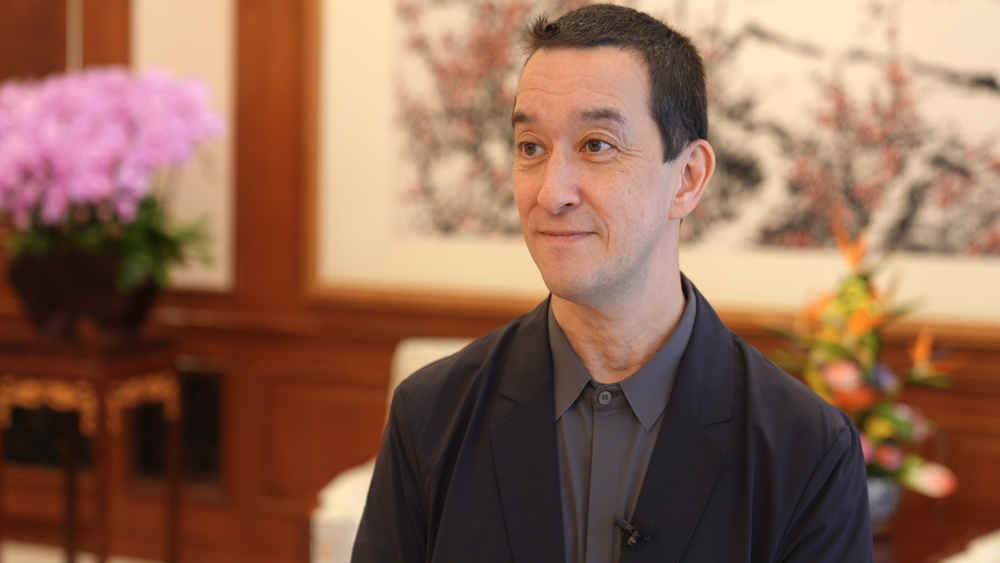
Colin Siyuan Chinnery (BA Chinese, 1997)
Co-authors
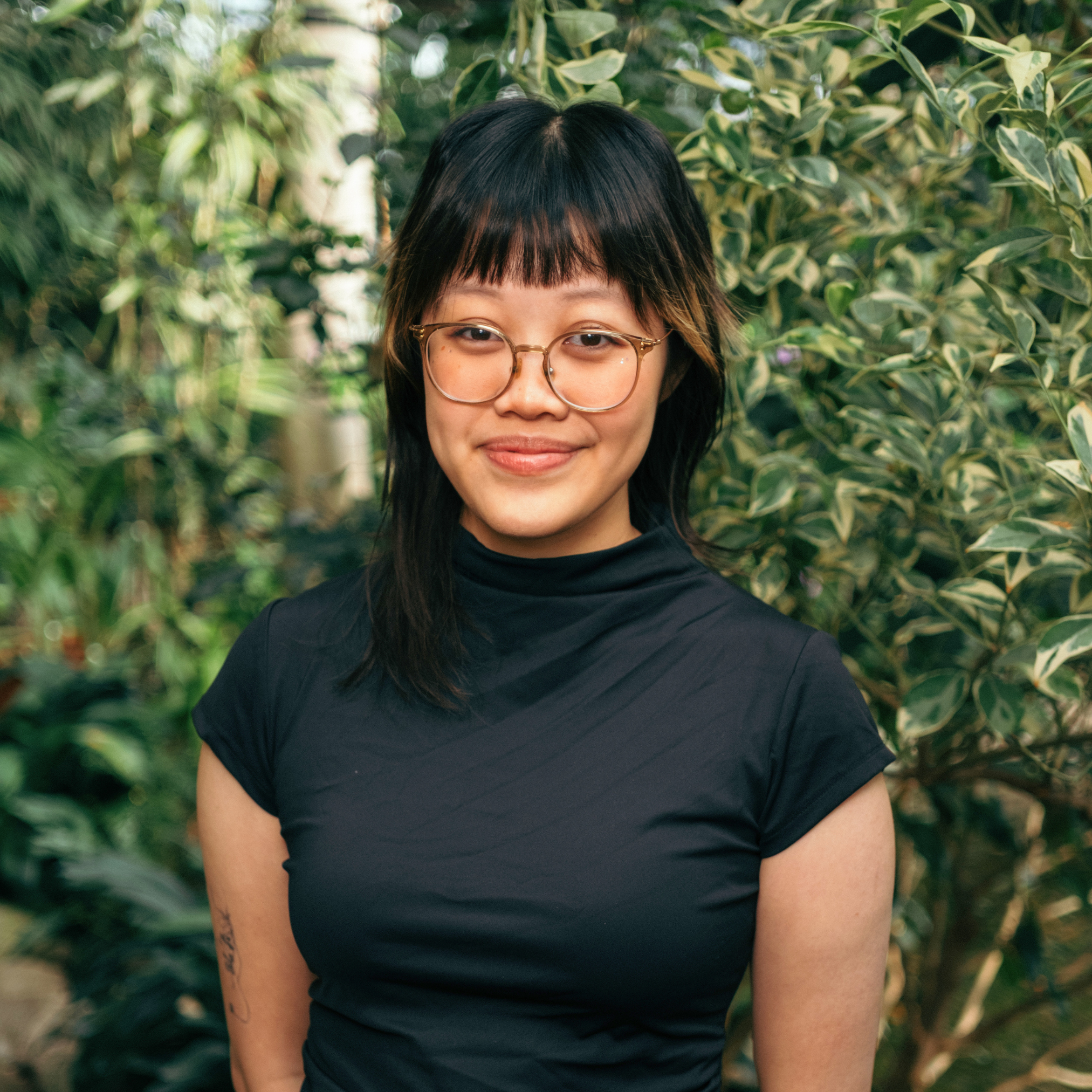
Sarah Chew, student on the MA History of Art and Archaeology, part of the Curating Cultures modules.
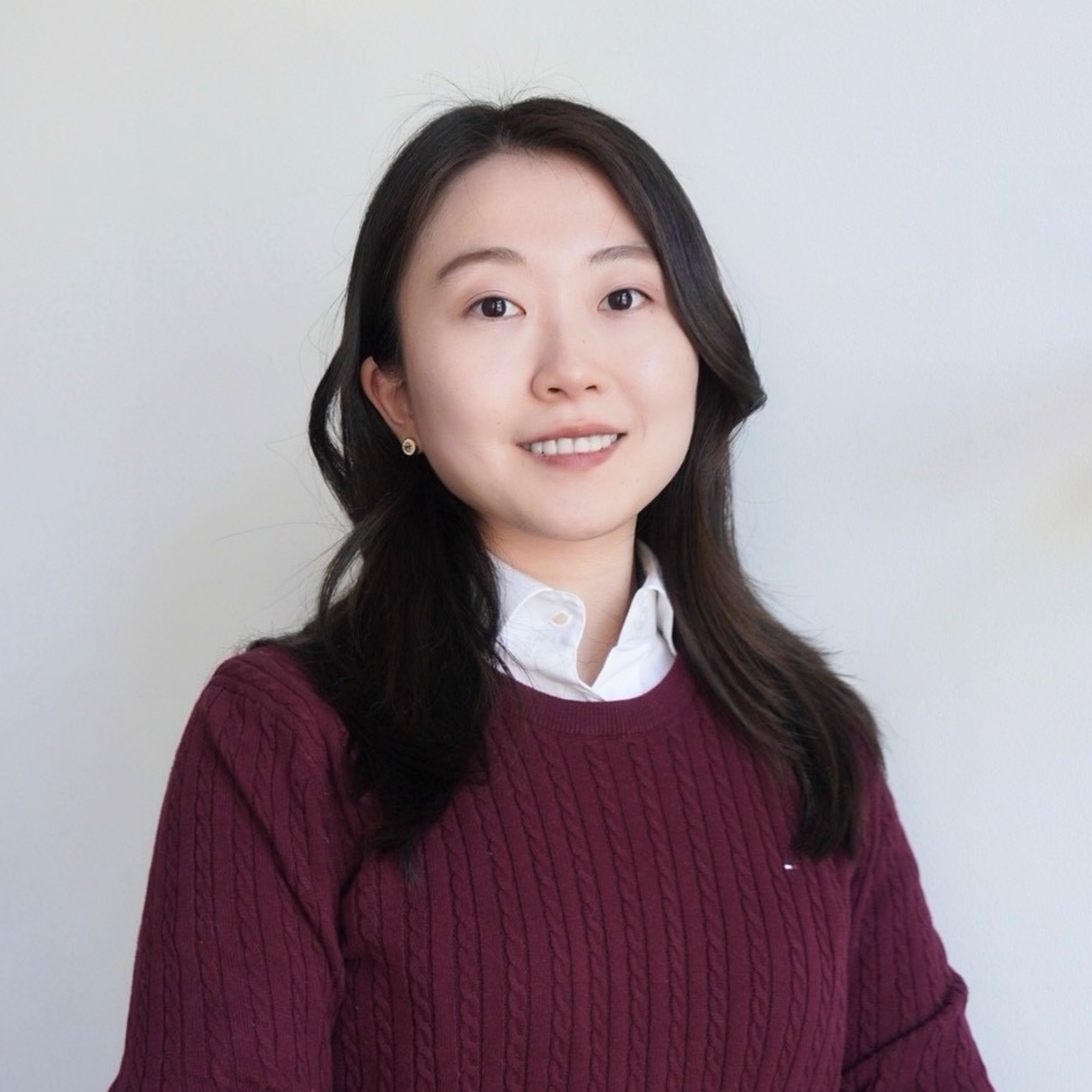
Yukie Shirasaki, student on the MA Curating Cultures
From language to creative awakening
For Colin Chinnery, studying at SOAS was never about pursuing a conventional academic career. He enrolled on the Chinese language and civilisation programme because, although he could speak Chinese fluently, he could not read or write the language. Becoming literate in his own heritage felt essential rather than academic. That motivation deepened through his relationship with his grandmother, a prominent Chinese writer, whose return to China late in life revealed layers of cultural memory and political history that had previously felt distant. Through SOAS, Colin found the intellectual space to explore language, history and identity in a more personal and meaningful way.
SOAS also offered early immersion. Moving directly into the year abroad in Beijing, Colin took seriously the idea that learning extended far beyond the classroom. Instead of focusing solely on coursework, he embedded himself in one of China’s first artist communities at Yuanmingyuan, documenting exhibitions, developing photographs in his dormitory room and experimenting with early video technology. It was here that he first felt “completely at ease with artists”. These encounters led to the formation of a band and marked the beginning of his creative practice.
Returning to China and creating a new museum model
After returning to London to complete his degree, Colin joined the British Library to work on the International Dunhuang Project, an academic role that deepened his engagement with manuscripts, languages and cultural heritage. While the position brought professional success, it also clarified that academia was not his long-term destination. Increasingly drawn to contemporary art and creative experimentation, he returned to China, reconnecting with the artistic networks first formed during his year abroad at SOAS.
That circuitous path eventually led to co-founding the Sound Art Museum in Beijing in 2023 with philanthropist Hong Feng.
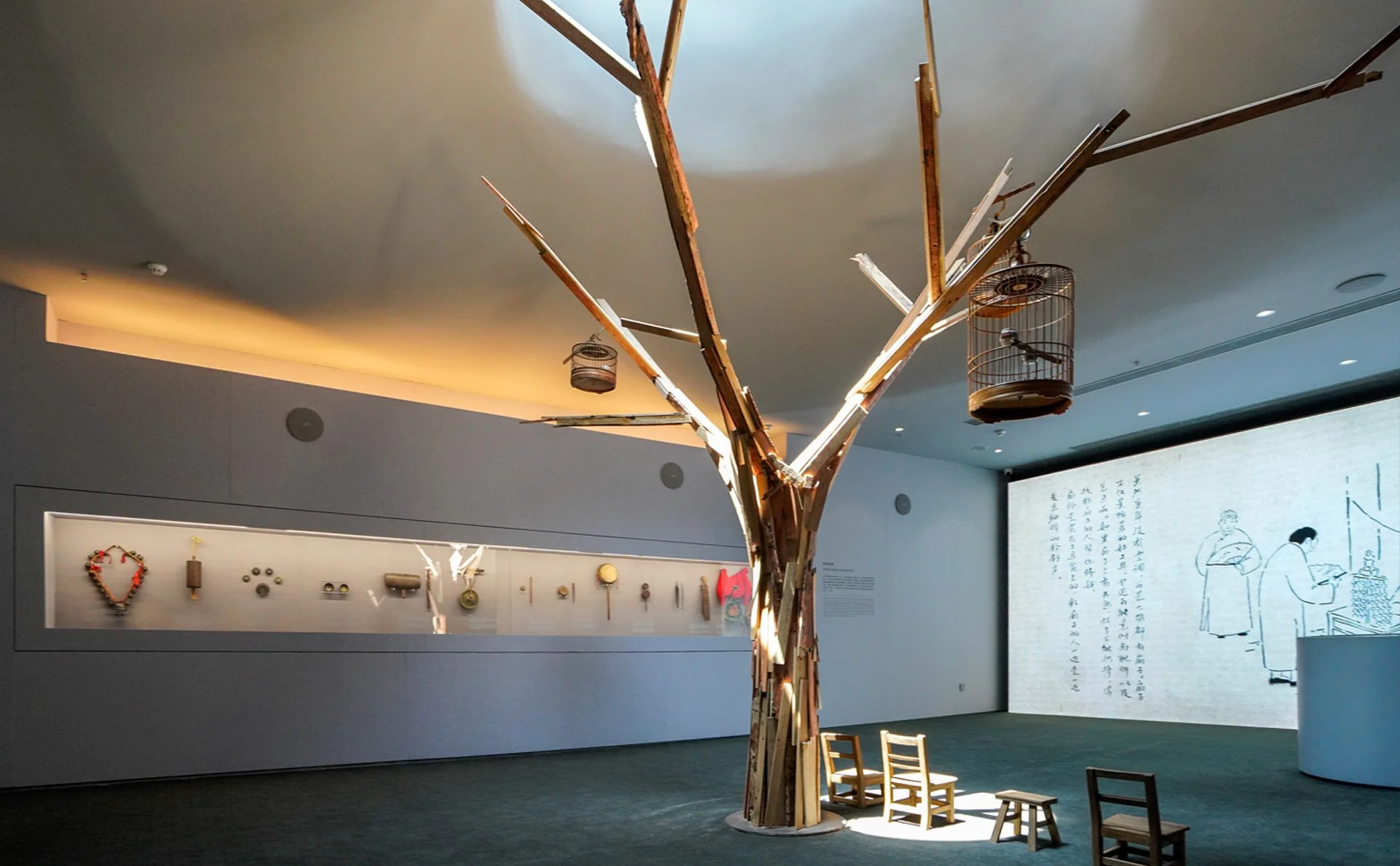
From the exhibition The Sounds of Old Beijing. Credit: Sound Art Musuem.
Dedicated entirely to sound, the museum challenges traditional assumptions about what a collection can be and how exhibitions are made. Colin explains, “If you're exhibiting something intangible, like a digital file, that makes it into a totally different proposition, which has a lot of potential”.
Colin points out that cultural sounds are disappearing at an alarming rate: “It is said that 99.9% of all animal species that have ever existed are now extinct. The same is true for cultural sounds. With animals, we have fossils - evidence of their existence that allows us to make educated assumptions about their lives. But when sounds disappear, they leave no trace at all”.
Operating outside Beijing’s main cultural hubs and without major institutional backing, the museum has developed gradually with a small team. Their focus has been on experimentation, adaptability and collaboration rather than scale, and they are testing new ways of engaging audiences and sustaining long-term practice.
Ecologies of sound
At the heart of the Sound Art Museum is the idea of ecology. Because sound connects naturally to science, culture, technology and the environment, the museum’s work is inherently cross-disciplinary. Rather than attempting comprehensive coverage, the museum builds collaborative networks with people who understand their own cultural and natural landscapes.
“We hope to record certain sounds before they vanish,” Colin explains, “The goal is not to keep dying traditions artificially alive, but to acknowledge their existence, experience them and learn from them.”
Dane Mitchell. Lost Bandwidth. 2023. Outdoor sound installation. 10 bullhorn loudspeakers, amplifiers, digital audio players, timer. @Dane Mitchell. Video by Fun lok.
This approach is most visible in two major project strands. The first focuses on acoustic ecology through Soundscape China, a nationwide collaboration developed with the Chinese Academy of Sciences. Using monitoring devices that record continuously across the country, the project gathers vast quantities of data on natural sound environments. Artificial intelligence tools then analyse these recordings to identify specific species and sound patterns. The next step involves training local volunteers to make high-quality recordings suitable for artistic and public use, ensuring that these soundscapes can be experienced and learned from before they disappear. The project has already been incorporated into a UNESCO ten-year programme and has led to new public initiatives, including the development of a Sonic Ecology Park in Beijing.
The second strand explores cultural ecology through a non-tangible sound map of China, recording the sounds of daily life, heritage and place across regions including Tibet, the Yellow River and the Great Wall.
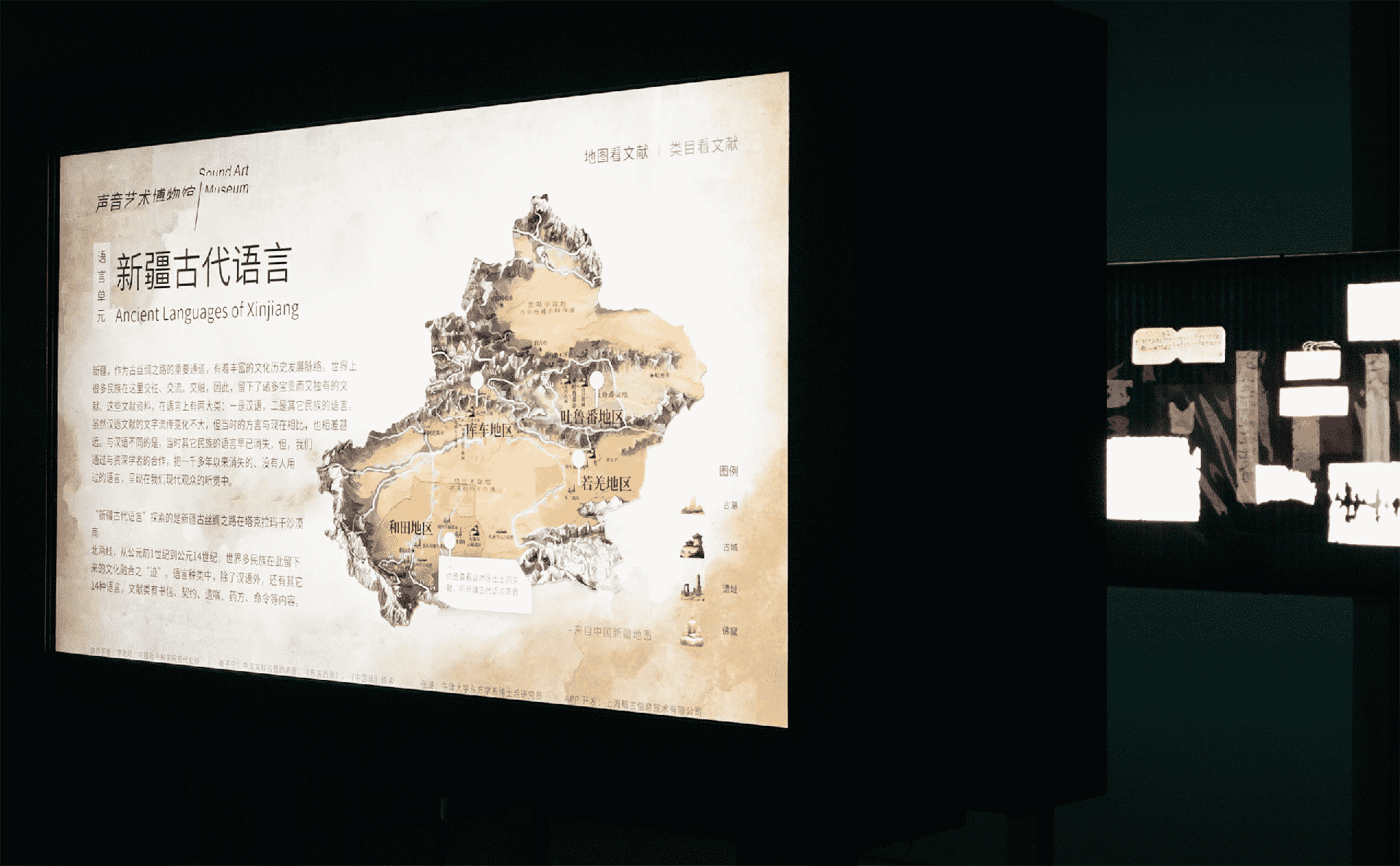
From the exhibition: Ancient Languages of Xinjiang. Credit: Sound Art Museum.
The museum has also developed international collaboration. The Sound Art Museum worked with the British Library on A Silk Road Oasis: Life in Ancient Dunhuang, recreating the sounds of extinct languages found in ancient manuscripts. Sound had not been considered as part of the exhibition until British Library curators visited the museum and recognised the potential of this approach.
“They immediately recognised that this would offer a unique and novel perspective for experiencing the exhibition,” Colin recalls. “We believe this is only the beginning of such collaborative projects.”
For Colin, the project demonstrated how sound can offer meaningful and original content rather than merely atmospheric background. He explains: “Sound and text were once inseparable - all texts used to be read aloud. Sound can provide meaningful and original content for any historical exhibition.”
Bridging cultures
As the Sound Art Museum looks ahead, its ambitions remain deliberately open-ended. Rather than fixing meaning or form, it seeks to grow organically through listening and collaboration, as an approach echoed in one of their current exhibitions, Unspoken Sound, which explores “the rupture between speaking and listening.”
For Colin, this perspective reflects a belief shaped at SOAS and refined over decades. He explains, “I believe that art in all its forms should be championed as the best bridge between cultures, especially in this time of insulation, division and conflict.
“Before the age of the entertainment industry, no culture of any country was created as a distraction. All culture emerged spontaneously from people striving to communicate what everyday language cannot. It conveys beauty and emotion, which are universal human experiences. It is this universality that must serve as a language between peoples. Art cannot solve all problems, but it is absolutely vital to keep us human in times of crisis.”
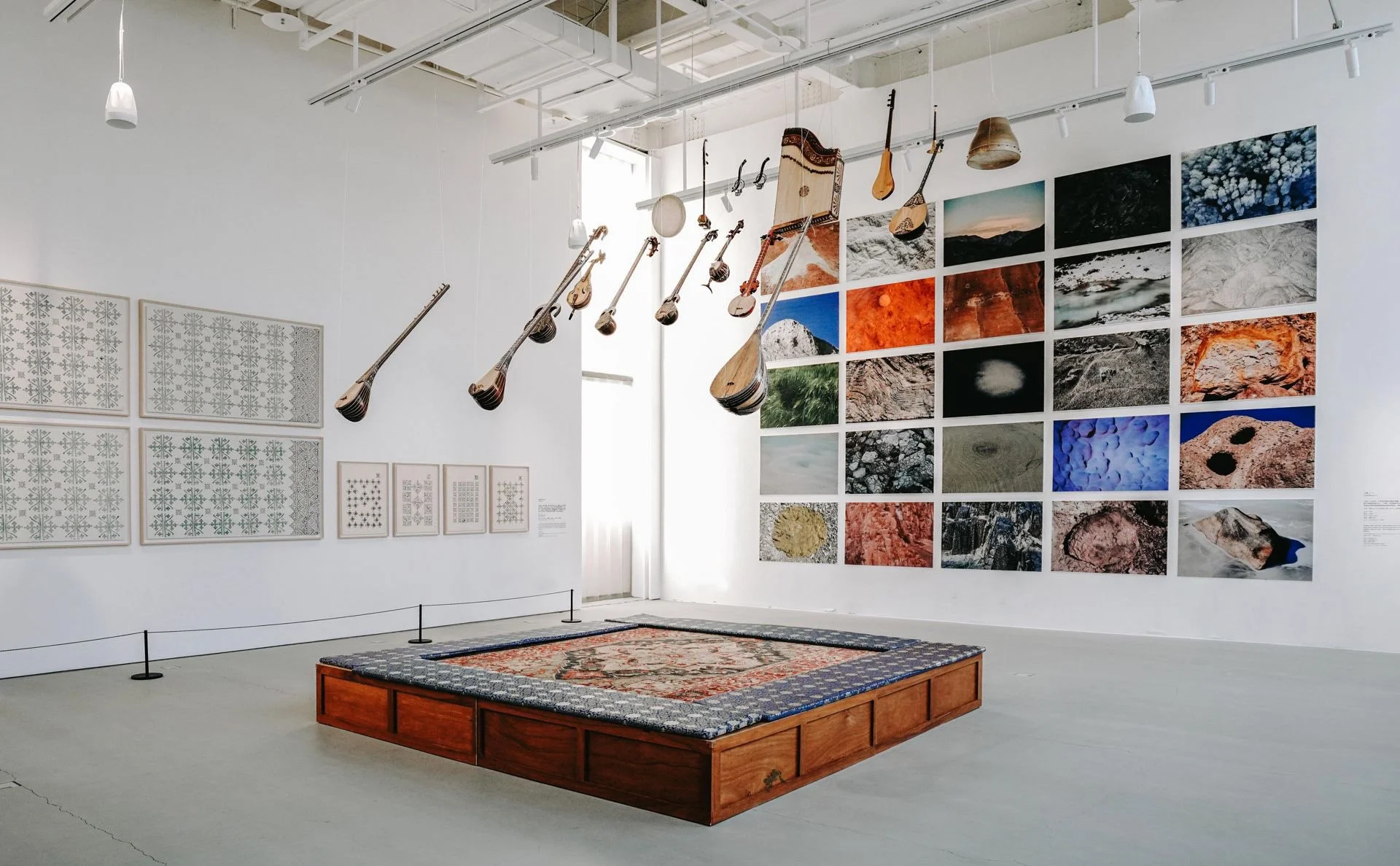
From the exhibition: Hotan Harmony. Credit: Sound Art Museum.
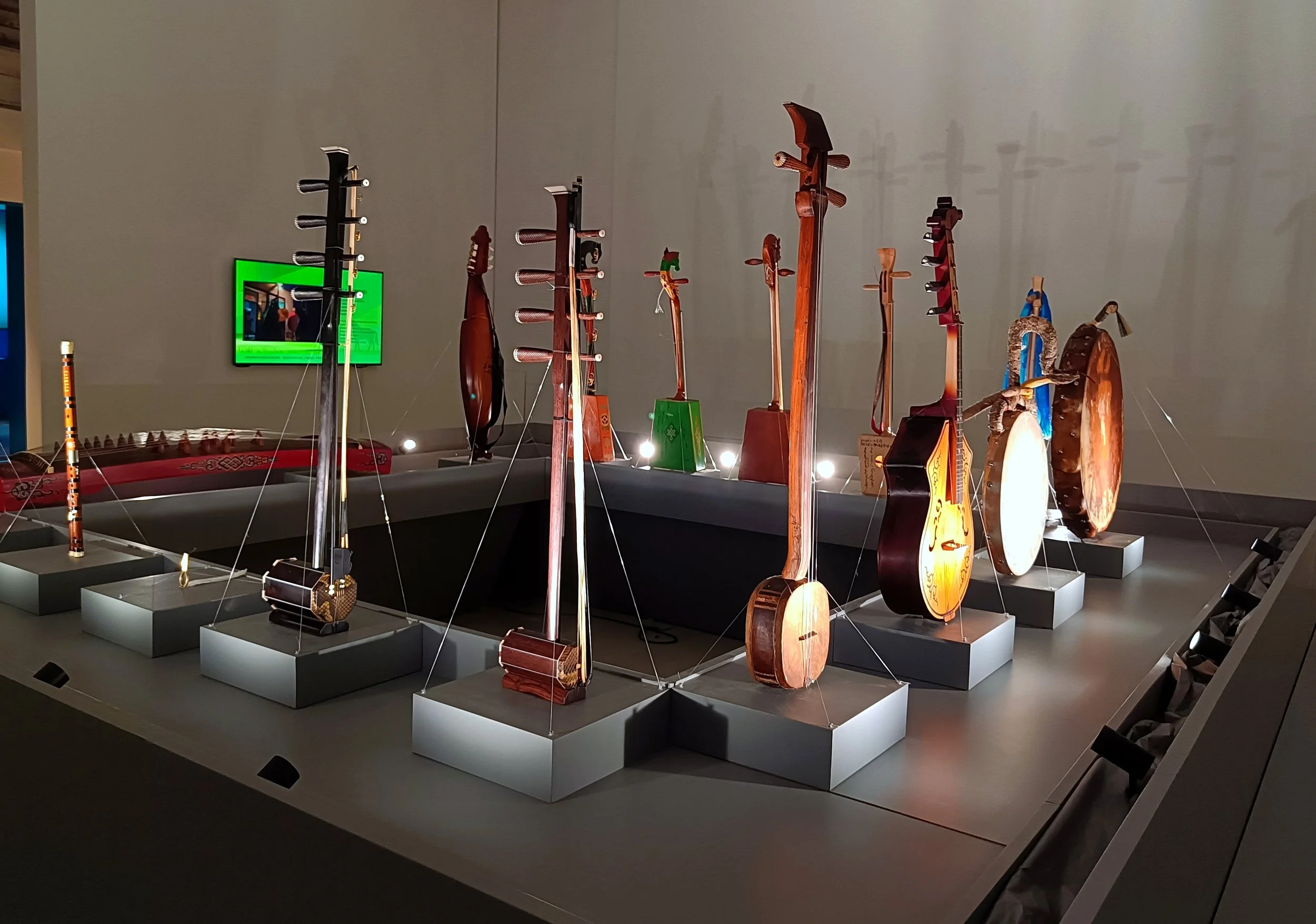
Header image from the exhibition: Steppe Notes: An Exhibition of Inner Mongolia Musical Instruments. Credit: Sound Art Museum.
Cultural Highlight
We asked: What is one cultural experience that inspired you?
“The last time a project truly had an impact on me was when Xiaoshi Wei and I took Inner Mongolian musicologist Yang Yucheng and musician Jin Gang to SOAS and Cambridge University to introduce their work.
Professor Yang (Mongolian name Bötölt) spent well over a decade reviving an extinct Mongolian musical tradition — the Horchin Heroic Epics.
Both the singing and the musical instrument used to accompany the sung poems had completely died out. Professor Yang managed to revive the tradition, and today he has hundreds of practitioners and has recorded over a thousand hours of performances.”
Features
-
![]()
Dr Gus Casely-Hayford: connecting communities through art and music in East London
-
![]()
Sutima Sucharitakul: building a global platform for Thai Contemporary Art
-
![]()
Nana Oforiatta Ayim: reimagining African cultural institutions and futures